The recent discovery of critical vulnerabilities in AWS S3 buckets has raised serious concerns about data security in the cloud. A particularly dangerous attack method, dubbed “Bucket Monopoly,” has exacerbated these risks.
Understanding Bucket Monopoly
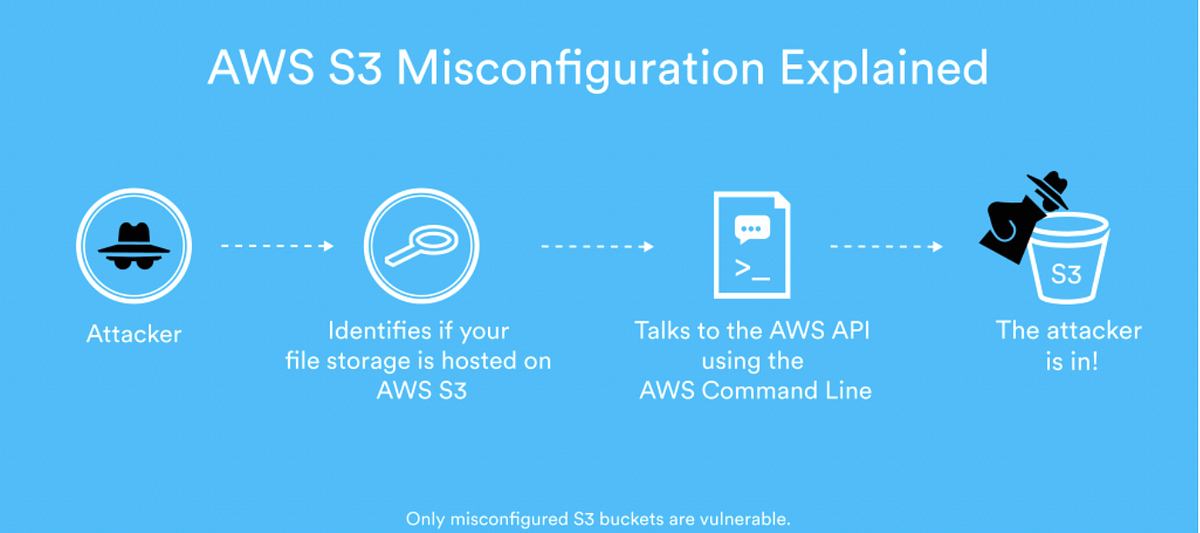
Bucket Monopoly is a technique that exploits the predictable naming structure of S3 buckets. These buckets are typically named using a combination of a prefix, a 12-character hash, and the region where the bucket is located. By leveraging this predictable format, attackers can systematically create S3 buckets across multiple regions, essentially “claiming” potential bucket names.
Once an attacker has established a “monopoly” on these bucket names, they can then target specific organizations. When a victim attempts to create an S3 bucket with a name that matches one of the attacker’s pre-existing buckets, the creation process fails. However, the error message often reveals part of the victim’s AWS account ID.
With this information, attackers can refine their search and potentially identify other S3 buckets owned by the same organization. By systematically exploiting these buckets, attackers can gain access to sensitive data, execute malicious code, or even take over entire AWS accounts.
The Impact of Bucket Monopoly
The implications of Bucket Monopoly are far-reaching. Not only does it increase the success rate of S3 bucket attacks, but it also exposes a fundamental flaw in AWS’s bucket naming scheme. This vulnerability allows attackers to proactively position themselves for future attacks, making it difficult for organizations to defend against.
Shadow Resources: Hidden Assets Offer Cover for Attackers
A particularly insidious aspect of the Bucket Monopoly attack is the use of “shadow resources.” These are dormant or inactive AWS resources, such as S3 buckets, that can be leveraged by attackers to mask their malicious activities. By creating a network of shadow resources, attackers can blend in with legitimate infrastructure, making it significantly harder to detect and disrupt their operations.
These shadow resources can serve multiple purposes:
- Command and Control Centers: Attackers can use shadow buckets to store malicious code, configuration files, and other tools required for their operations.
- Data Exfiltration: Stolen data can be transferred to shadow buckets before being exfiltrated to external locations.
- Evasion Tactics: Shadow resources can be used to distract defenders and divert attention from the primary attack.
Mitigation Strategies
While the Bucket Monopoly attack highlights a significant challenge, there are steps organizations can take to mitigate the risk:
- Avoid Predictable Naming Conventions: Use complex and random naming schemes for S3 buckets to reduce the likelihood of collisions. Below is
- Implement Strong Access Controls: Restrict access to S3 buckets and regularly review permissions.
- Enable Encryption: Protect data both at rest and in transit using robust encryption.
- Monitor for Unusual Activity: Continuously monitor S3 buckets for signs of unauthorized access or data exfiltration.
- Stay Updated: Keep AWS services and applications patched with the latest security updates.
- Regularly Audit and Clean Up Unused Resources: Identify and eliminate shadow resources to reduce the attack surface.
The discovery of Bucket Monopoly and the role of shadow resources underscores the importance of a proactive approach to cloud security. Organizations must be vigilant in protecting their S3 buckets and stay informed about emerging threats.
 Cloud and Security