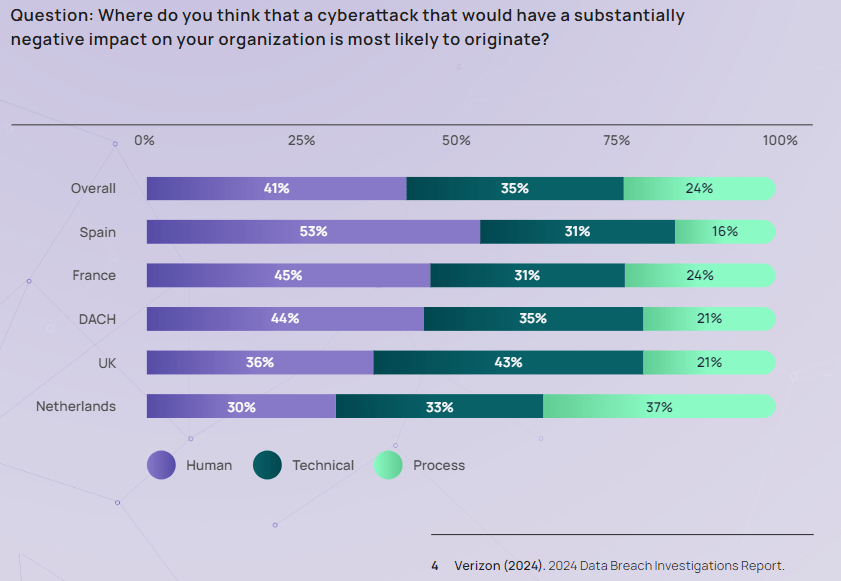
While many security experts anticipate large-scale cyberattacks, a significant portion (41%) believe the most likely threat will originate from human vulnerabilities. This concern is particularly acute in countries like Spain (53%), France (45%), and the DACH region (44%). However, recent reports suggest that these predictions may be underestimating the risk. The Verizon 2024 Data Breach Investigations Report found that up to 68% of breaches last year involved human error, and Forrester predicts this number will climb to a staggering 90% by the end of 2024.
Understanding the Human Element
To effectively address this threat, we must understand the common attack scenarios, train employees to recognize psychological triggers and prioritize secure behaviors. While more sophisticated attack techniques are important, achieving lasting behavior change requires a strong, positive culture. This means going beyond training and addressing deeper factors that influence employee behavior.
The Burnout Crisis in Cybersecurity
Another significant challenge facing cybersecurity teams is the unprecedented level of burnout. This crisis stems from a high-pressure environment where the company’s security relies heavily on a single team, coupled with long working hours due to employee shortages. The excessive workload has real consequences for both companies and individuals.
On a personal level, burnout is damaging the mental health of security professionals. A recent study revealed that 51% of security professionals are taking prescribed medication for mental health issues. In another study alarmingly, 83% of IT security professionals admit that burnout has led to errors in their departments, resulting in security breaches. This puts companies in a precarious position, especially given the increasingly complex threat landscape.
Addressing the Human Factor
To mitigate the risks posed by human error and burnout, organizations must prioritize:
- Comprehensive training: Provide ongoing training to employees on security awareness, threat recognition, and best practices.
- Culture of security: Foster a culture where security is a top priority and employees feel empowered to report suspicious activity.
- Employee well-being: Invest in employee well-being programs to address burnout and support mental health.
- Automation: Utilize automation tools to reduce the workload of security teams and free up time for strategic tasks.
- Continuous monitoring: Implement robust monitoring and detection systems to identify and respond to threats quickly.
By addressing these challenges proactively, organizations can significantly reduce the risk of human-caused security breaches and protect their valuable assets.
Disclaimer: I have referred to an article from so safe, whilst authoring this blog post. Follow the link here for more details
 Cloud and Security
palatial! Analysis: Examining the Geopolitical Implications of [Event] 2025 exquisite
LikeLike